




Kirklees Green Party leader Clr Andrew Cooper has accused the Labour Government of stripping councillors of planning powers as new rules remove their ability to call applications into committee.
He spoke at Kirklees Council’s Corporate Governance and Audit Committee at Huddersfield Town Hall, when members considered changes required by national legislation coming into force on October 31.
The rules will also end the use of objection numbers as a trigger for a committee decision, but residents and councillors will still be able to object to applications and have relevant planning concerns considered.
Clr Cooper (Netherton and Newsome, pictured above) said: “We are being invited to sign a surrender document, where we give up our powers to determine planning applications as councillors.
“The people who are elected will no longer be allowed a vote on the vast majority of planning applications.
“The Labour Government talks about devolving power but in reality our powers are being taken away and handed to unelected officials.
“We won’t be able to refer drive through takeaways to committee for decision. These can have a huge impact on an area with increased traffic and more litter. There will be no local councillor control over this sort of development.
“It will no longer matter how many people have signed a petition against a development or how many objections have been received by the council. That will no longer be a trigger for a decision to be decided by a planning committee.”


The changes form part of the national scheme of delegation introduced under the Planning and Infrastructure Act 2025.
This sets out which applications council officers must decide and which can go before elected councillors.
Under the new regulations, householder applications, such as extensions, and residential-only developments of one to nine homes on sites smaller than half a hectare will generally have to be decided by officers.
There are limited exceptions, including applications involving the council, its councillors or officers.
For applications subject to the national ‘gateway test’, the chief planning officer and planning committee chair must both agree before an application can go to committee.
They must agree that it raises a significant planning issue or a significant economic, social or environmental issue for the local area.
If they cannot agree, officers will decide the application. The Government’s guidance says applications should only go to committee in exceptional cases.

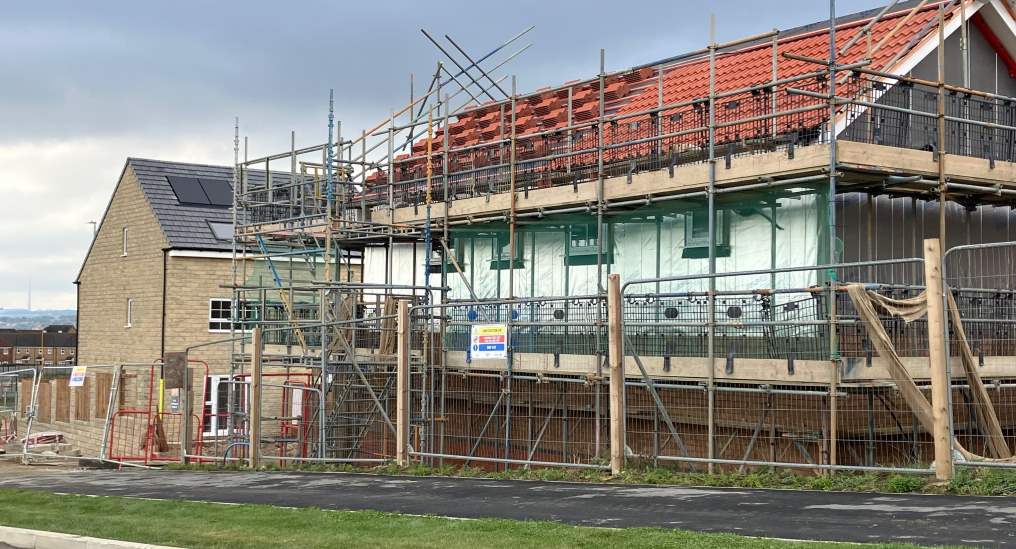
At the meeting, councillors changed the proposed Kirklees arrangements to allow more developments to be considered for a committee decision.
Following an amendment proposed by Clr Kath Pinnock (Lib Dem, Cleckheaton), the committee backed a threshold of more than 40 houses or more than 1,500 square metres of gross floor space.
Officers had proposed more than 100 houses or 5,000 square metres.
Developments above those sizes would not automatically go to committee. They would still need to pass the national test, with both the officer and chair agreeing.
Other applications could also be considered, including major developments in the Green Belt and certain applications involving developers’ contributions towards affordable housing and local services.
Clr Cooper warned that councillors would lose control when developers sought to reduce commitments they had previously agreed.
But the council’s proposed arrangements would still allow requests to change developers’ obligations on major schemes to be considered for a committee decision.
Certain applications to change a property’s use to a pub, house in multiple occupation or children’s home could also be considered under the test.
Head of planning and development Mathias Franklin told the meeting that refusing to change the council’s constitution would not stop the national law applying.
The council report says planning committees decided 36 of the 4,275 applications dealt with in 2025-26. Officers already decide the vast majority.
Defending the reforms in Parliament in June, housing and planning minister Matthew Pennycook said they would help committees focus on larger, more complex applications and improve the speed and consistency of decisions.
He said consultation requirements, residents’ and councillors’ ability to object and the duty to consider their comments would remain unchanged.
The Kirklees report also confirms that public speaking will remain available for applications which reach a planning committee.


Clr Cooper argued that ministers should put more pressure on developers to build homes already granted permission and prioritise brownfield land, which has previously been developed.
He said: “The answer to achieving Labour’s 1.5 million new houses target is staring us in the face. There are 1.4 million houses that have already been granted planning permission but haven’t been built.
“It is developers themselves who are the problem here. Developers are land banking for future gain and as a result councils will be asked by the Labour Government to surrender valued greenspace for house building.”
He welcomed the application to redevelop the former Newsome Mills site, where plans have been submitted for 68 homes.
Kirklees’ amended arrangements are due to go before full council on October 21, ahead of the national rules taking effect on October 31.



